
How to play riichi mahjong
A short introduction for your first time at the table: what a hand is made of, how a turn works and how to win. The rest comes with your first games.
1.The goal
Four people play. Everyone starts with 30,000 points. A game (hanchan) is two rounds of hands: East and South.
In each hand the goal is to be the first to complete a 14-tile hand. The winner takes points from the others. At the end of the game the player with the most points wins.
2.The tiles
A set has 136 tiles — four of each.



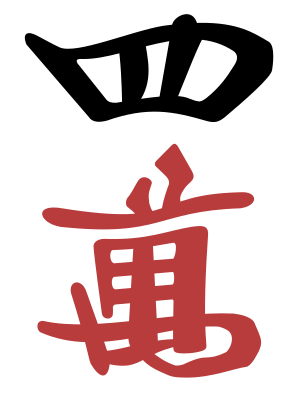
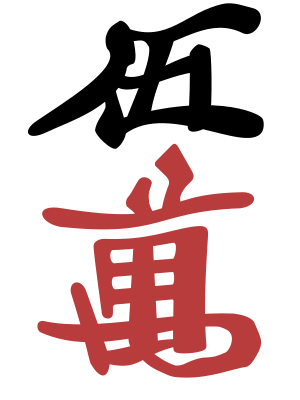



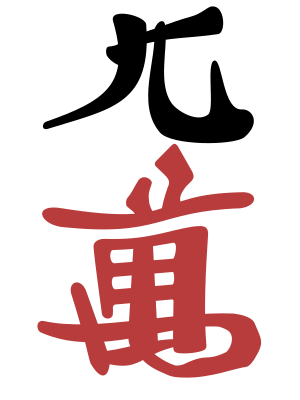



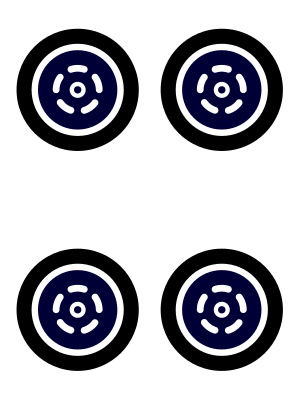
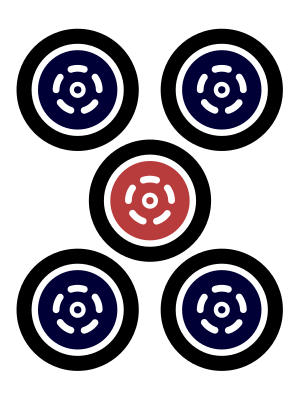
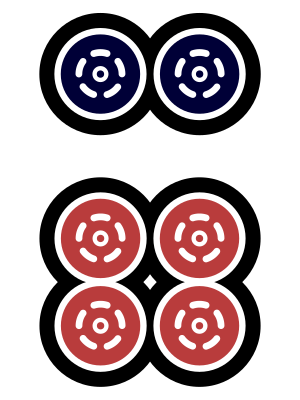


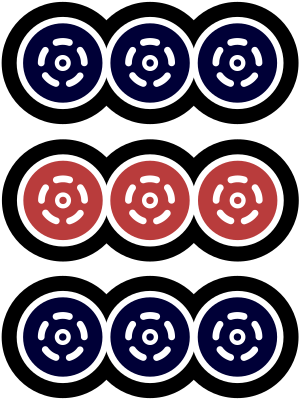

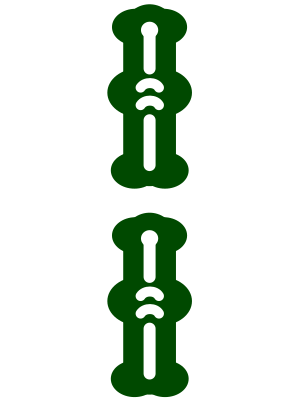
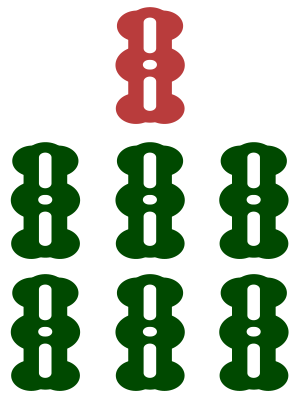

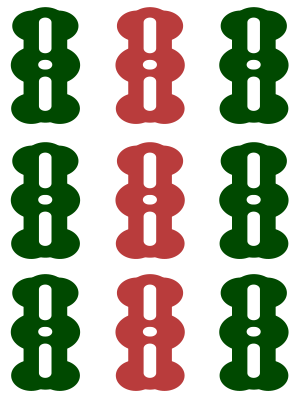
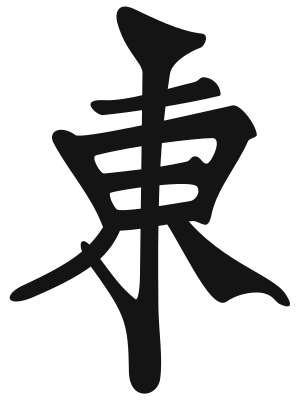
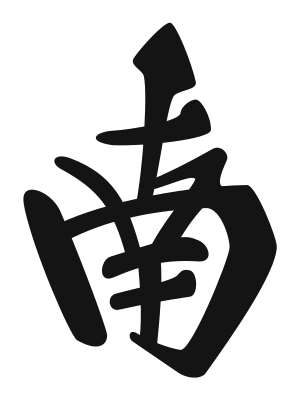
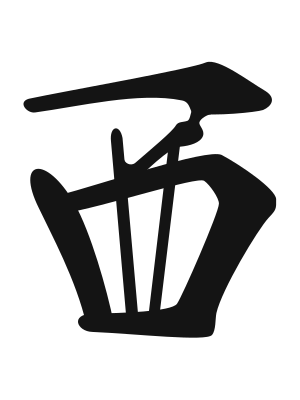
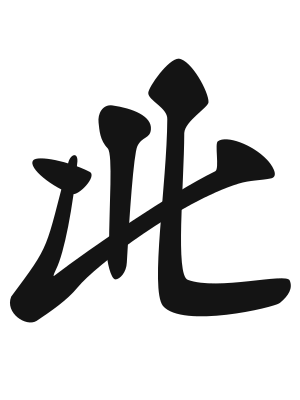

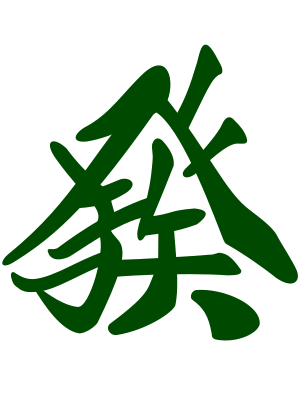

Ones and nines are terminals; winds and dragons are honours — many combinations depend on them.
3.What a hand is made of
You hold 13 tiles. A complete hand is 14 tiles: four sets and a pair.
Two special hands have no sets — no need to learn them right away:
4.How a hand starts and turns
- Seats — each player has a wind: East is the dealer, then South, West and North counter-clockwise. The dealer pays and wins more.
- The wall — the tiles are shuffled face down and each player builds a wall of two rows of 17 tiles in front of them. Part of it is the dead wall, where the dora indicator is turned over.
- The deal — everyone takes 13 tiles; the dealer draws the 14th and discards first.
- A turn — play goes counter-clockwise: draw a tile from the wall — now you hold 14 — and discard one face up in front of you. Everyone's discards are kept separately and visible to all.
- Claiming — you can take another player's discard: pon or kan from anyone, chi only from the player on your left. A claimed set is laid face up on the table.
The deal is easier to see once than to read about: at a club they'll show you at the table, and online on Tenhou or Mahjong Soul the software builds the wall and deals.
5.Key ideas
- Closed and open hand — as long as you haven't claimed any discard, your hand is closed — only you can see it. Once you claim one, it's open: easier to build, but some combinations (including riichi) are not available. At first we recommend keeping your hand closed: it makes penalties easier to avoid — a closed hand can always declare riichi, so you won't end up without a yaku.
- Tenpai — you are one tile away from a complete hand. The tiles that complete it are your wait. For example, in this hand 4 and 5 pin wait for 3 or 6 pin — a two-sided wait.
- Dora — a valuable tile shown by the indicator on the dead wall. Each dora makes your hand more valuable, and 4 dora in a hand are worth as much as an expensive combination. Until you learn to count points, try not to discard dora. But dora without a yaku can't win.
6.Simple tactics to start with
- 5 blocks — a complete hand is 5 blocks: 4 sets and a pair. From the first turn split your hand into 5 blocks — complete sets, almost-complete ones (two in a row or two of a kind) and a pair — and discard lone tiles that fit nowhere: first winds and dragons without a pair, then ones and nines. Keep the hand closed — then you can always declare riichi in tenpai.
- Betaori — full defence — if another player declares riichi and your hand is far from tenpai, stop building it and discard only safe tiles. Ending the hand without a win is better than paying for someone else's expensive hand.
- Furiten and safe tiles — you can't win by ron on a tile that is already among your own discards — so you can't discard a tile and then wait on it (or on a related tile of the same wait). The key point to start with: everything in the discards of a player who declared riichi is safe against them.
In the example above the 5 blocks are 1-2-3 man, 4-5 pin, 7-8 sou, a pair of dragons and a pair of 5 sou. The lone 9 pin, West wind and 1 sou go first.
7.Yaku — the combinations you win with
In riichi mahjong four sets and a pair are not enough: you can only win if the hand has a combination — a yaku. Yaku come in two kinds.
Tile-based — what the hand is made of (like poker hands)
Situational — how and when you won
8.Riichi
If your hand is closed and you are in tenpai, you can declare riichi: put a 1,000-point stick on the table and discard a tile sideways.
After riichi you can't change your hand — you discard every tile you draw until the winning one comes. In return riichi is a yaku worth 1 han, and winning within a go-around (ippatsu) or hidden dora (ura-dora) can add more.
9.How to call a win
- Ron — another player discarded your winning tile — they pay the whole value of the hand.
- Tsumo — you drew the winning tile yourself — all three others pay.
10.Scoring in a nutshell
A hand's value comes from han (yaku and dora) and fu (how the hand is built and how it won). A rule of thumb: 5 han is a mangan, 8,000 points (12,000 if the dealer wins). More han means more points — up to a yakuman, 32,000.
At first opponents and the referee help count at the table. You can practise in the scoring trainer — on ready-made hands, with explanations.
📋 Cheat sheet
Tiles
Sets · a hand = 4 sets + a pair
What a hand is worth — roughly
| Han | Non-dealer | Dealer |
|---|---|---|
| 1 | ≈ 1 000 | ≈ 1 500 |
| 2 | ≈ 2 000 | ≈ 2 900 |
| 3 | ≈ 4 000 | ≈ 5 800 |
| 4 | ≈ 8 000 | ≈ 12 000 |
| mangan | 8 000 | 12 000 |
| haneman | 12 000 | 18 000 |
| baiman | 16 000 | 24 000 |
| sanbaiman | 24 000 | 36 000 |
| yakuman | 32 000 | 48 000 |
Full table and formula
Fu. 20 base, +10 for a closed ron, +2 for tsumo (except pinfu), plus pons, kans, a yakuhai pair and awkward waits; round the total up to 10. Chiitoitsu is always 25 fu.
| Fu | 1 han | 2 han | 3 han | 4 han |
|---|---|---|---|---|
| 20 | — | — · 400/700 | — · 700/1 300 | — · 1 300/2 600 |
| 25 | — | 1 600 | 3 200 · 800/1 600 | 6 400 · 1 600/3 200 |
| 30 | 1 000 · 300/500 | 2 000 · 500/1 000 | 3 900 · 1 000/2 000 | 7 700 · 2 000/3 900 |
| 40 | 1 300 · 400/700 | 2 600 · 700/1 300 | 5 200 · 1 300/2 600 | mangan |
| 50 | 1 600 · 400/800 | 3 200 · 800/1 600 | 6 400 · 1 600/3 200 | mangan |
| 60 | 2 000 · 500/1 000 | 3 900 · 1 000/2 000 | 7 700 · 2 000/3 900 | mangan |
| 70 | 2 300 · 600/1 200 | 4 500 · 1 200/2 300 | mangan | mangan |
| 80 | 2 600 · 700/1 300 | 5 200 · 1 300/2 600 | mangan | mangan |
| 90 | 2 900 · 800/1 500 | 5 800 · 1 500/2 900 | mangan | mangan |
| 100 | 3 200 · 800/1 600 | 6 400 · 1 600/3 200 | mangan | mangan |
| 110 | 3 600 · 900/1 800 | 7 100 · 1 800/3 600 | mangan | mangan |
| Fu | 1 han | 2 han | 3 han | 4 han |
|---|---|---|---|---|
| 20 | — | — · 700 ∀ | — · 1 300 ∀ | — · 2 600 ∀ |
| 25 | — | 2 400 | 4 800 · 1 600 ∀ | 9 600 · 3 200 ∀ |
| 30 | 1 500 · 500 ∀ | 2 900 · 1 000 ∀ | 5 800 · 2 000 ∀ | 11 600 · 3 900 ∀ |
| 40 | 2 000 · 700 ∀ | 3 900 · 1 300 ∀ | 7 700 · 2 600 ∀ | mangan |
| 50 | 2 400 · 800 ∀ | 4 800 · 1 600 ∀ | 9 600 · 3 200 ∀ | mangan |
| 60 | 2 900 · 1 000 ∀ | 5 800 · 2 000 ∀ | 11 600 · 3 900 ∀ | mangan |
| 70 | 3 400 · 1 200 ∀ | 6 800 · 2 300 ∀ | mangan | mangan |
| 80 | 3 900 · 1 300 ∀ | 7 700 · 2 600 ∀ | mangan | mangan |
| 90 | 4 400 · 1 500 ∀ | 8 700 · 2 900 ∀ | mangan | mangan |
| 100 | 4 800 · 1 600 ∀ | 9 600 · 3 200 ∀ | mangan | mangan |
| 110 | 5 300 · 1 800 ∀ | 10 600 · 3 600 ∀ | mangan | mangan |